


Every old hard drive in your business still holds data until it is destroyed.
If a drive is lost, resold or thrown away without being destroyed, it can lead to a data breach, fines and lost customer trust.
This guide explains the main ways to destroy data. It also explains why commercial hard drive shredding is often the safest and best-value choice.
It also covers why a professional service matters, what UK law expects and which certifications to look for.
Use it as a checklist when choosing a hard drive shredding company in the UK.
The Importance of Secure Data Destruction
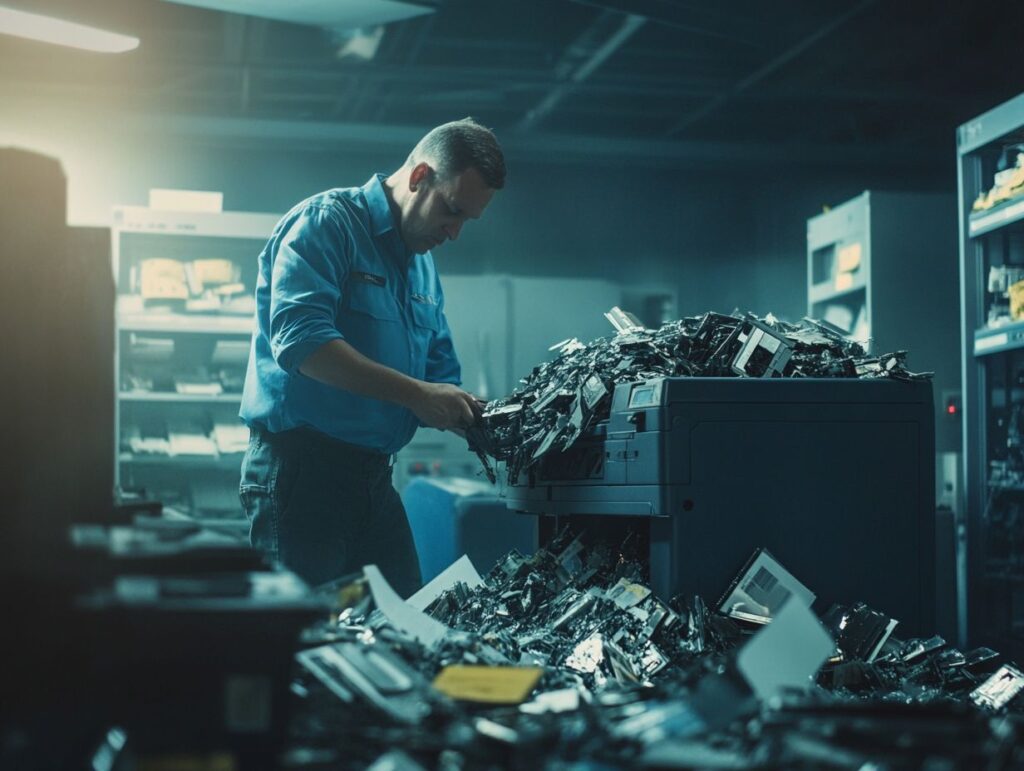
Hard drives keep data long after files are deleted. Secure data destruction makes sure that data can never be recovered. Data breaches are on the rise, and commercial hard drive shredding is one of the most reliable ways to protect your business.
Under UK GDPR, your business is responsible for personal data until it is destroyed. A breach can lead to fines of up to £17.5 million or 4% of annual turnover, as well as damage to your reputation. The ICO’s guide to data security explains what is expected.
Risks of Improper Data Disposal
Throwing away or reselling hard drives without destroying them properly puts your business at real risk. Customer records, staff details and financial data can all be recovered from drives that were only wiped or formatted.
The damage can include fines, legal claims and lost trust from customers. To prevent this, use secure shredding and check your disposal process regularly.
The effects can last long after the breach itself. Investigations, complaints and bad press can follow a business for years.
Train your staff on how to handle old IT equipment, and make sure every drive is accounted for until it is destroyed.
Types of Data Destruction Methods
There are two main ways to destroy data. The first is physical destruction, such as hard drive shredding. The second is software-based, such as data wiping.
Which one you need depends on whether you want to reuse the drive. For drives that held sensitive data, our hard drive destruction service offers the highest level of security.
Overview of Physical and Digital Destruction Techniques
Physical destruction means shredding or crushing the drive. An industrial shredder cuts it into small fragments, so the data can never be recovered. This is the safest option for drives that held personal or financial data.
Digital methods use certified software to overwrite every part of the drive, so the old data cannot be read. This is known as data wiping or sanitisation. Encryption alone does not destroy data. Erasing the encryption key can make encrypted data unreadable.
Using both methods gives the strongest protection. For example, you might wipe drives you want to reuse and shred the rest.
The NCSC’s guidance on secure sanitisation of storage media explains when to use each method. You can also read about degaussing as a further option.
Benefits of Commercial Hard Drive Shredding
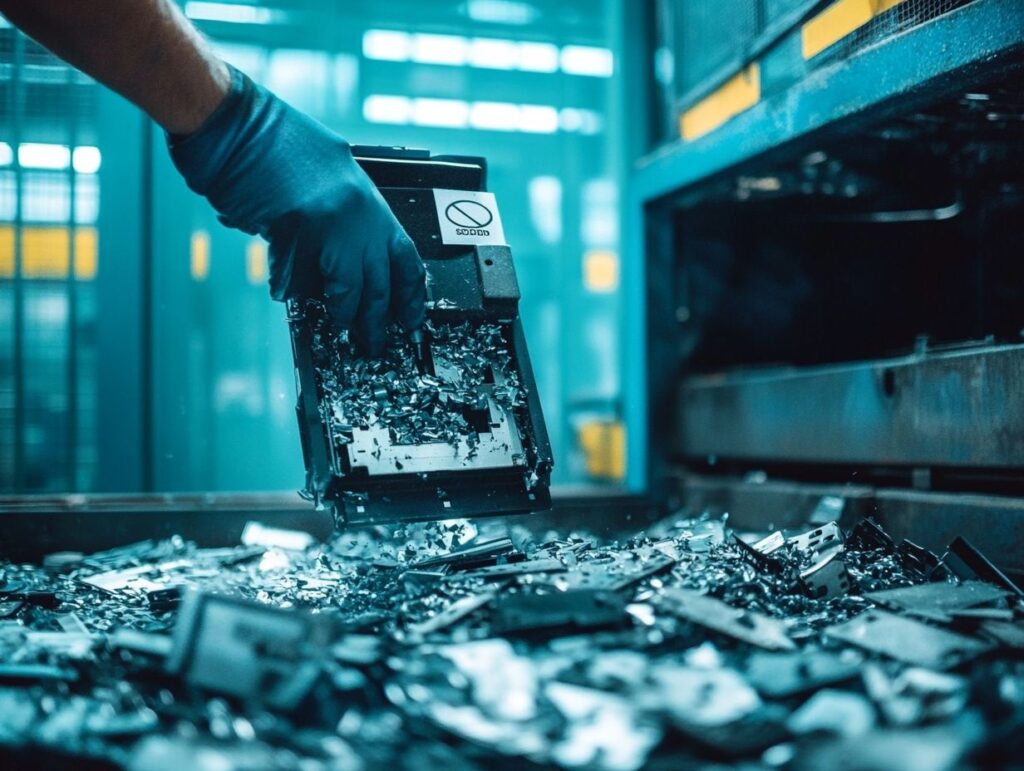
Commercial hard drive shredding destroys data completely and quickly. It removes the risk of a drive being recovered and misused.
It also saves time and money compared with doing the job in-house. A good provider handles the compliance paperwork and recycles the shredded metal under UK WEEE rules.
Efficiency and Cost Savings
Outsourcing hard drive shredding saves your team time and means you don’t have to buy specialist equipment. Your staff can focus on their own work while experts handle data destruction.
Destroying drives by hand is slow and often incomplete. A professional provider can shred hundreds of drives in the time your team would take to deal with a few.
Every drive is destroyed and recorded, so there are no gaps for data to slip through. This lowers your risk of fines and shows clients you take data security seriously.
Choosing a Professional Data Destruction Service
The provider you choose directly affects your data security and compliance. Check that they follow UK GDPR and recognised standards. They should also give you a certificate of destruction for every job.
Agree clear terms in writing, such as collection times, how drives are tracked and when certificates are issued. This keeps the provider accountable for every step.
Factors to Consider
Use this checklist when choosing a hard drive shredding company:
- Certifications. Look for providers that work to BS EN 15713 and hold recognised IT disposal certifications such as ADISA.
- Certificate of destruction. Make sure every certificate lists each drive’s serial number, the date and the method used.
- Chain of custody. Ask how drives are tracked from your door to the shredder, including locked containers and GPS-tracked vehicles.
- Staff vetting. Check that the staff who handle your drives are background-checked and trained.
- On-site or off-site options. On-site shredding lets you watch your drives being destroyed. Off-site shredding is often better value for large volumes.
- Waste carrier licence. Shredded drives are still e-waste and must be recycled legally.
How Commercial Hard Drive Shredding Works

It helps to understand the process so you can ask the right questions. It usually starts in one of two ways: drives are collected from your premises, or a mobile shredder comes to your site.
Each drive is then shredded into small fragments so no data can be recovered. Every step is recorded to keep a clear chain of custody. See the full hard drive shredding process.
Step-by-Step Process
A typical commercial hard drive shredding job follows these steps:
- Record. Each drive’s serial number is logged before it leaves your control.
- Secure collection. Drives are placed in locked containers and moved in tracked vehicles, or shredded on-site.
- Optional wiping or degaussing. Some businesses wipe or degauss drives first for extra security.
- Shredding. An industrial shredder cuts the drives into small fragments.
- Certificate. You receive a certificate of destruction listing every serial number.
- Recycling. The shredded metal is recycled under UK waste rules.
Each step gives you a full audit trail if regulators or clients ask for proof. See how this fits into wider computer and laptop recycling.
Ensuring Compliance with Data Protection Regulations
Compliance protects your business from fines and damage to its reputation. Under UK GDPR, you must keep personal data secure until it is destroyed, and you must be able to prove you did so.
Keep a clear record of every disposal, including certificates of destruction. Review your process regularly to make sure it still meets your obligations.
Legal Requirements for Data Destruction
UK GDPR says you must protect personal data with the right security, including when you dispose of it. You should only keep personal data for as long as you need it, then destroy it securely.
Your retention policy should say how long each type of data is kept and how it is destroyed afterwards. If you don’t follow these rules, you could face fines, complaints and claims from the people affected.
Train staff on your disposal policies, and check regularly that they are being followed.
Certifications and Standards for Data Destruction
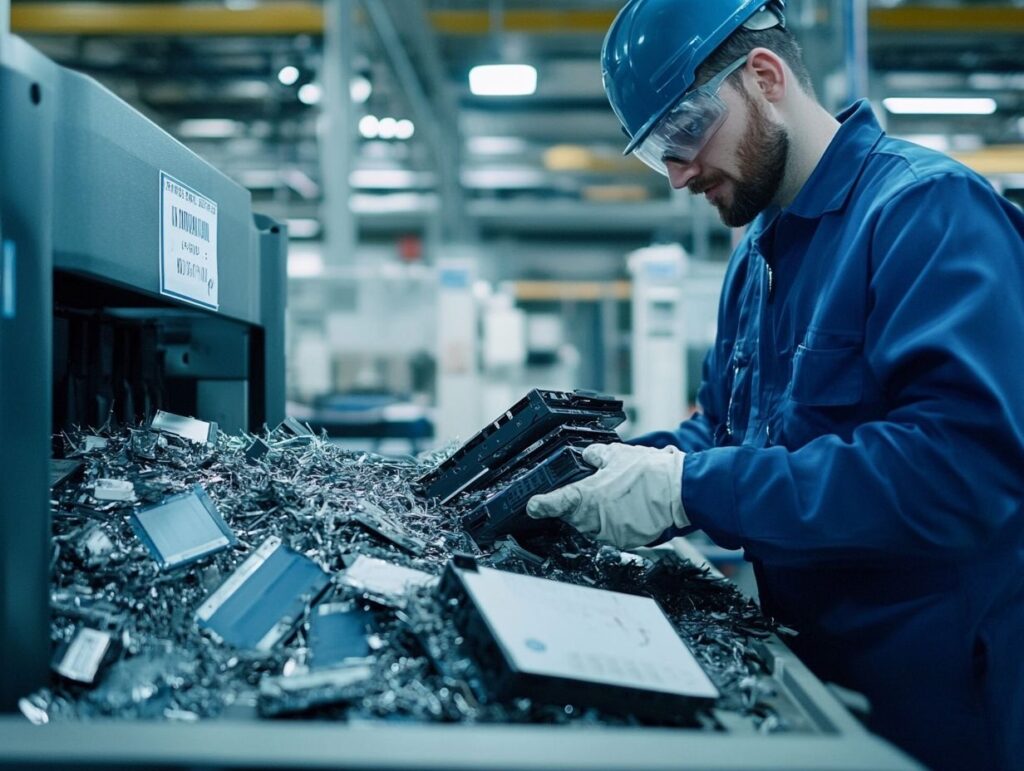
Certifications show that a provider follows recognised best practice. Look for providers that work to BS EN 15713, the code of practice for securely destroying confidential material.
Independent checks by a third party give you extra confidence that your data is handled securely.
Ensuring Quality and Security
Ask providers how they keep their process secure and consistent. Look for regular audits, CCTV in shredding areas and vetted staff.
Make sure your own team knows how to store old drives safely until they are collected.
Detailed records and a traceable process give you proof if anything is ever questioned.
Frequently Asked Questions
What is commercial hard drive shredding for businesses?
Commercial hard drive shredding for businesses is a service that specialises in securely destroying large quantities of electronic data stored on hard drives. This ensures that sensitive information cannot be accessed or retrieved by unauthorized individuals.
Why do businesses need bulk data destruction solutions?
Businesses need bulk data destruction solutions to protect their sensitive information from falling into the wrong hands. This is especially important for industries that deal with confidential information such as healthcare, finance, and government agencies.
How does commercial hard drive shredding work?
Commercial hard drive shredding typically involves physically destroying the hard drive using a powerful shredder. The shredded pieces are then recycled to ensure that no data can be recovered. Some providers also offer on-site shredding for added security and convenience.
What are the benefits of using commercial hard drive shredding for businesses?
Using commercial hard drive shredding for businesses offers several benefits, including secure and complete destruction of data, compliance with data protection regulations, and peace of mind knowing that sensitive information is properly disposed of.
What types of businesses can benefit from bulk data destruction solutions?
All types of businesses can benefit from bulk data destruction solutions, regardless of their size or industry. Any organization that collects and stores sensitive information, whether it be customer data, employee records, or financial information, can benefit from this service.
How can a business choose the right commercial hard drive shredding provider?
When choosing a commercial hard drive shredding provider, businesses should consider factors such as the provider’s reputation, security protocols, certifications, and compliance with data protection regulations. It is also important to ensure that the provider offers a certificate of destruction as proof of proper disposal.