
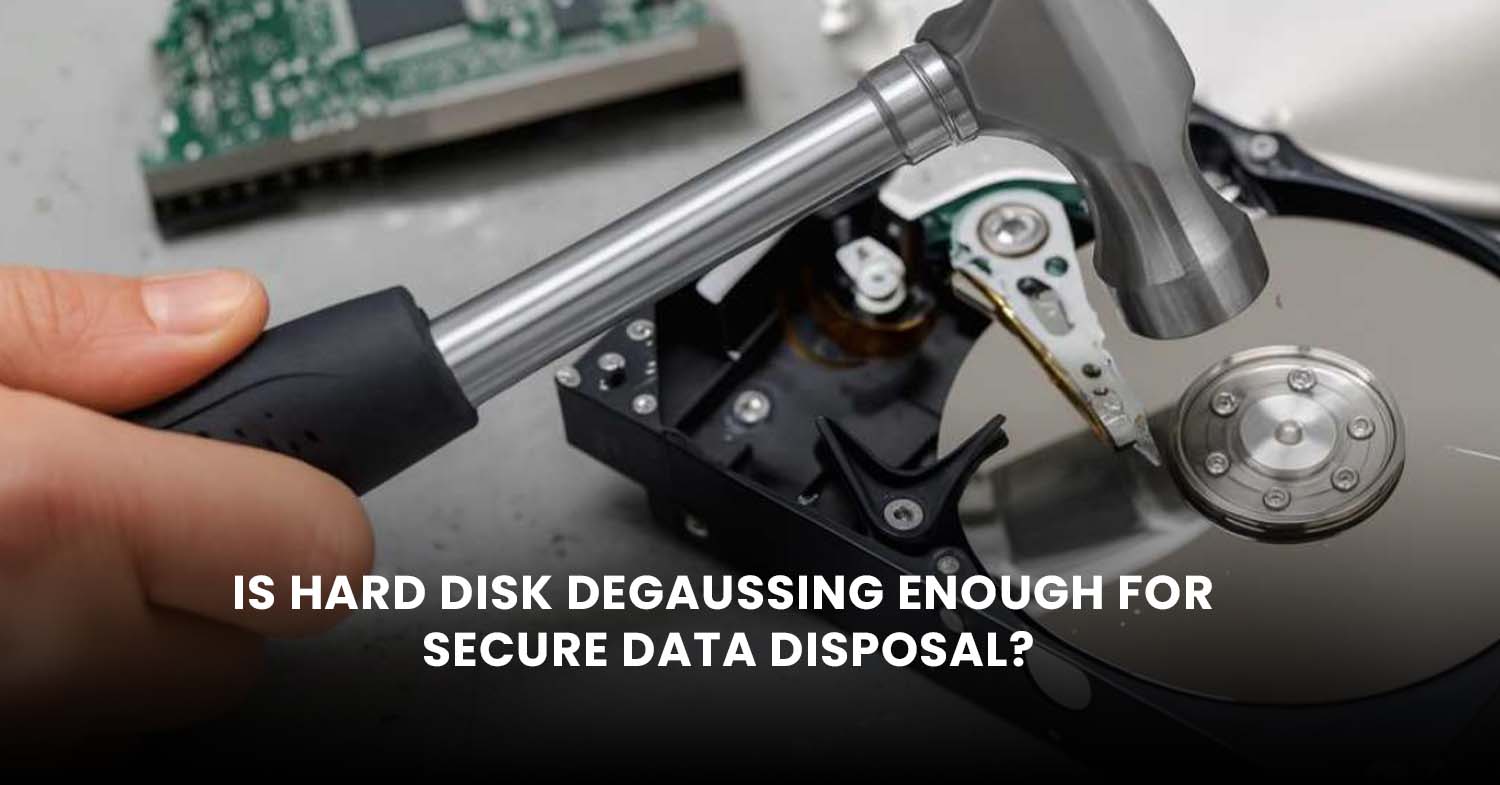

In today’s data-driven world, information is one of the most valuable assets a business owns. From financial records and client information to internal communication and employee data, every piece of digital information carries value — and risk. When IT equipment reaches the end of its life cycle or when a company upgrades its infrastructure, secure data disposal becomes a top priority.
One of the most widely used methods for destroying data is hard disk degaussing — a process that uses powerful magnetic fields to erase data from hard drives and storage tapes.
But the real question is: Is degaussing alone enough for secure data disposal in the UK?
In this detailed guide, we’ll explore how degaussing works, its benefits and limitations, and why combining it with physical destruction ensures complete data protection. We’ll also explain how Total Shred, a professional shredding service in the UK, helps organizations meet compliance and achieve total data security through certified IT disposal solutions.
What Is Hard Disk Degaussing and How Does It Work?
Hard disk degaussing is a process that uses a strong magnetic field to erase all data stored on a hard drive or magnetic tape. It disrupts the magnetic patterns that hold data, making it permanently unreadable. This method is ideal for businesses looking for fast and secure IT disposal in the UK.
Total Shred, a trusted professional shredding service in the UK, uses certified degaussing machines to guarantee complete data removal and compliance with GDPR regulations.
Understanding the Science Behind Hard Disk Degaussing
Hard disk degaussing is the process of erasing data by exposing a magnetic storage device to an extremely powerful magnetic field. Traditional hard drives store data magnetically, meaning every bit of information is represented by magnetic orientation on the disk’s platter. Degaussing neutralises this orientation, effectively destroying the data pattern and making recovery impossible.
Companies like Total Shred, which specialise in hard drive destruction in the UK, often use certified degaussing equipment that meets international standards. The science is simple but powerful — once the drive’s magnetic field is disrupted, no software or hardware recovery tool can retrieve the data. This makes it an effective choice for businesses dealing with confidential or classified information.
Step-by-Step Process of How Degaussing Erases Data
The degaussing process starts with preparing the hard drives for destruction. Trained professionals inspect and verify the device type to ensure compatibility with the degausser. The drive is then placed into the machine, which generates a strong electromagnetic pulse that disrupts the magnetic domains storing data. Within seconds, the drive’s stored information becomes permanently unrecoverable.
After degaussing, experts at Total Shred provide a certificate of destruction, verifying that the process was completed according to compliance standards for IT disposal in the UK. This step is crucial for maintaining transparency and accountability during audits or data protection reviews.
Different Types of Degaussing Equipment and Their Uses
There are two main types of degaussing equipment: coil-based and capacitor discharge degaussers. Coil-based models are suitable for low-volume data disposal, while capacitor discharge degaussers are more powerful, making them ideal for commercial and industrial use.
Total Shred uses high-grade, certified degaussing systems designed for maximum efficiency and security. These machines are capable of handling various device types, ensuring that every drive, tape, or storage medium is completely sanitised before disposal.
Why Do Businesses Choose Hard Disk Degaussing for Data Security?
Companies handle sensitive data every day, making secure disposal essential. Degaussing ensures total erasure of information without the risk of recovery, protecting businesses from data breaches and fines.
Many organisations in the UK choose Total Shred for their hard drive destruction and IT disposal in the UK because it’s quick, cost-effective, and environmentally friendly.
Complete Data Erasure vs Partial Deletion — What’s the Difference?
Many people mistakenly believe that deleting files or formatting a hard drive removes data permanently. In reality, these methods only delete file paths, not the data itself — making it recoverable using simple recovery software. Degaussing, on the other hand, ensures complete data erasure by eliminating the magnetic field that stores the information.
This makes degaussing a preferred choice for businesses that require absolute confidentiality, such as financial institutions, healthcare providers, and government departments. Total Shred, a leading name in professional shredding services in the UK, integrates degaussing with physical destruction for the highest level of data security.
How Degaussing Saves Time and Costs Compared to Other Methods
Degaussing offers a quick and cost-effective solution for data disposal. Unlike physical destruction, which requires manual effort and disposal of shredded materials, degaussing can sanitize hundreds of drives in a short period. This makes it ideal for large-scale IT disposal in the UK where time and efficiency matter.
Total Shred provides both on-site and off-site degaussing options, allowing businesses to choose a method that best fits their operational needs and budget while maintaining compliance.
Environmental Benefits of Using Hard Disk Degaussing
Degaussing contributes to environmental sustainability by allowing devices to be reused or recycled once the data is erased. Since the process doesn’t physically damage the drive’s exterior, certain components can be repurposed — reducing electronic waste.
Total Shred promotes eco-friendly disposal practices, ensuring that all materials from hard drive destruction in the UK are recycled responsibly, in compliance with the WEEE (Waste Electrical and Electronic Equipment) Directive.
What Are the Limitations of Hard Disk Degaussing?
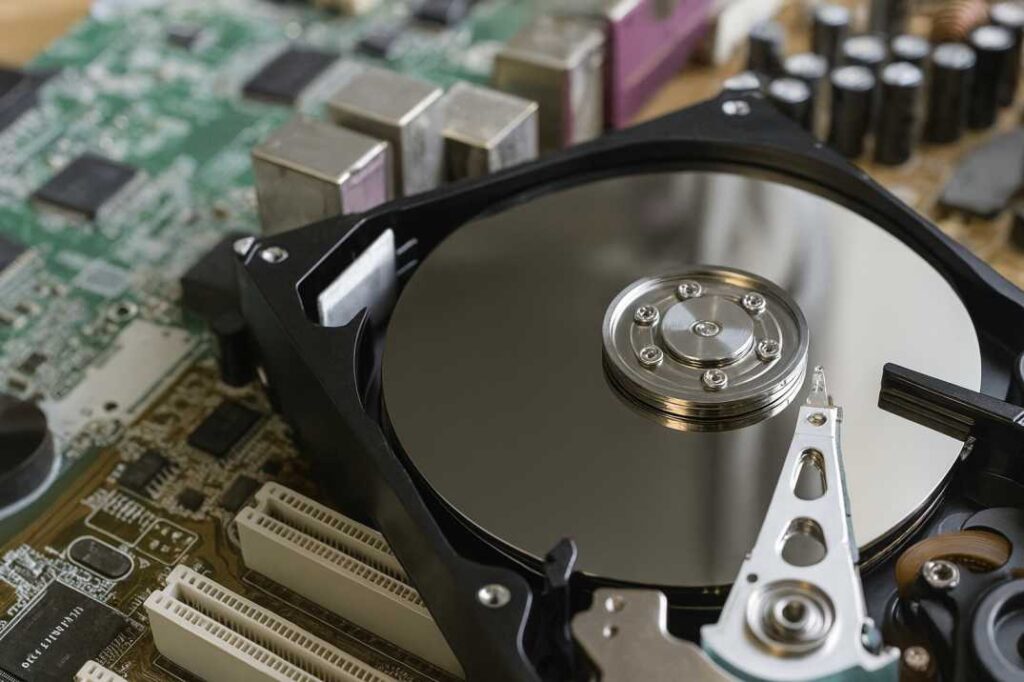
While degaussing works perfectly on traditional hard drives, it doesn’t affect solid-state drives (SSDs). Using uncertified or outdated degaussers can also leave data traces.
That’s why Total Shred recommends combining degaussing with hard drive destruction in the UK for maximum security and full data compliance.
When Degaussing Might Not Be Enough to Secure Data
While degaussing is powerful, it’s not always sufficient on its own. For instance, modern drives with built-in encryption or advanced platters may not fully respond to magnetic fields. In such cases, Total Shred recommends combining degaussing with physical hard drive destruction in the UK to ensure total security.
Compatibility Challenges with Modern and SSD Drives
Degaussing is effective only on magnetic storage devices such as HDDs and tapes. However, it does not work on SSDs (Solid State Drives) or flash-based storage, which store data electronically rather than magnetically. As technology evolves, this limitation makes it essential for businesses to adopt hybrid data disposal strategies.
Risks of Using Low-Quality or Outdated Degaussers
Not all degaussers are created equal. Low-quality or outdated equipment may fail to generate sufficient magnetic power, leaving traces of recoverable data. That’s why businesses should always rely on certified professionals like Total Shred, who use government-approved degaussers and adhere to UK security standards.
Are There Better or Complementary Alternatives to Hard Disk Degaussing?
No single method guarantees total data protection. Combining degaussing with physical destruction—like shredding or crushing—offers the best results.
Total Shred professional shredding service in the UK ensures all types of drives are completely destroyed, preventing any chance of data recovery.
Physical Destruction: Shredding, Crushing, and Pulverizing Explained
Physical destruction methods like shredding, crushing, and pulverizing provide irreversible destruction of storage media. Total Shred professional shredding service in the UK ensures complete destruction by breaking down hard drives into tiny particles, eliminating any chance of data recovery.
How Data Wiping Software Can Serve as an Additional Layer of Security
Data wiping software overwrites the drive’s existing data multiple times, making it unreadable. While it’s slower than degaussing, it can serve as an extra layer of protection — especially for devices incompatible with magnetic erasure.
Comparing Degaussing vs Physical Destruction: Which Is More Secure?
While both methods are effective, combining degaussing with physical destruction guarantees maximum data protection. Total Shred offers both services, ensuring that businesses achieve full compliance and peace of mind when disposing of sensitive data in the UK.
How Can Businesses Choose the Right Data Disposal Method?
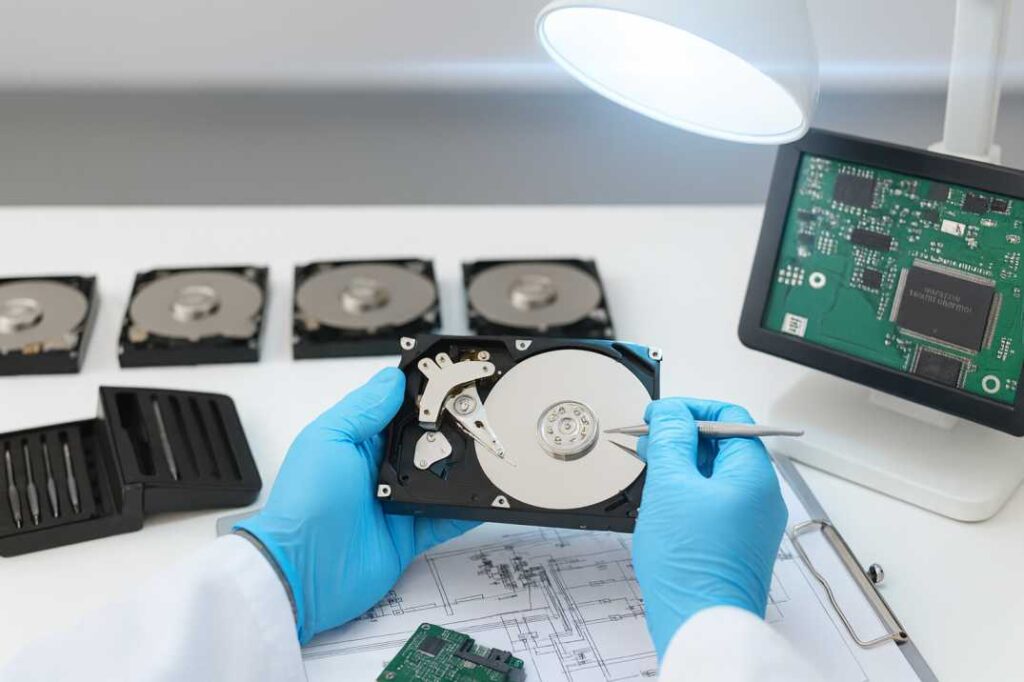
The best disposal method depends on storage type, data sensitivity, and compliance needs.
Businesses should choose certified providers like Total Shred, which offers tailored IT disposal in the UK solutions, ensuring every step follows GDPR (General Data Protection Regulation)and environmental standards.
Key Factors to Consider Before Relying on Degaussing Alone
Before depending solely on degaussing, businesses should evaluate their device types, data sensitivity, and legal obligations. For complete assurance, Total Shred recommends pairing degaussing with hard drive destruction in the UK.
Industry-Specific Requirements for Data Disposal
Industries like finance, healthcare, and defense have unique data protection requirements. Partnering with a certified IT disposal company in the UK ensures adherence to sector-specific laws and standards.
Ensuring Compliance with GDPR and Other Data Protection Regulations
Under GDPR, businesses must ensure that all personal data is permanently destroyed once it’s no longer needed. Working with Total Shred, which provides compliance documentation, helps companies meet these legal obligations without risk.
Is Hard Disk Degaussing Truly Secure in 2026 and Beyond?
Degaussing remains effective for magnetic drives, but combining it with physical destruction provides long-term security.
Total Shred continues to lead with advanced hard drive destruction in the UK, helping businesses achieve complete data protection and compliance for the future.
Evaluating the Long-Term Reliability of Degaussing
While degaussing remains reliable for magnetic media, evolving storage technologies demand complementary disposal solutions. Businesses should continuously update their data destruction strategies to match technological trends.
When Should You Combine Degaussing with Physical Destruction?
Whenever high-security or classified information is involved, Total Shred recommends combining degaussing with professional shredding services in the UK. This dual-layer method ensures complete, irreversible destruction of all data-bearing materials.
Final Thoughts : on Choosing the Right Secure Data Disposal Strategy
In conclusion, hard disk degaussing is an effective but not standalone solution for data disposal. The safest approach is a combination of degaussing, physical destruction, and certified IT disposal in the UK, offered by trusted providers like Total Shred. With rising cybersecurity threats and evolving storage technology, relying on experts ensures your organisation remains compliant, protected, and sustainable.
FAQs About Commercial Document Shredding
What is hard disk degaussing?
Hard disk degaussing is a process that uses a powerful magnetic field to erase all data stored on a magnetic hard drive or tape. The magnetic force randomizes the magnetic domains on the disk platters, making the data permanently unreadable and irrecoverable.
Is degaussing better than deleting or formatting a hard drive?
Yes. Deleting or formatting a drive only removes file directories, not the actual data. That data can often be recovered with software tools. Degaussing, on the other hand, completely destroys the magnetic structure of the drive, ensuring total and irreversible data erasure.
Does degaussing work on SSDs (solid-state drives)?
No. Degaussing only works on magnetic storage like traditional hard drives and tapes. SSDs use electronic storage, so they must be wiped using data erasure software or physically destroyed by a professional shredding service in the UK like Total Shred.
Can a degaussed hard drive be reused?
Typically, no. After degaussing, the drive’s magnetic components and firmware become permanently damaged. The drive cannot be reformatted or reused and is considered non-functional. It should be recycled through an IT disposal in the UK service for environmental compliance.
Why should I use a professional shredding service instead of DIY methods?
DIY methods like hammering or drilling are risky and often fail to fully destroy data. A professional shredding service in the UK, such as Total Shred, provides certified destruction, proof of disposal, and ensures full GDPR compliance — giving you security and accountability.