

Deleting files does not remove them. Formatting a drive does not either. The data sits there until something overwrites it, and recovery specialists are good at finding what is left behind.
That is the gap most businesses miss. A drive goes in a skip, or a cupboard, or gets sold on eBay, and the assumption is that the data went with it. If you are looking into how to destroy a hard drive, the method matters less than the proof you can produce afterward.
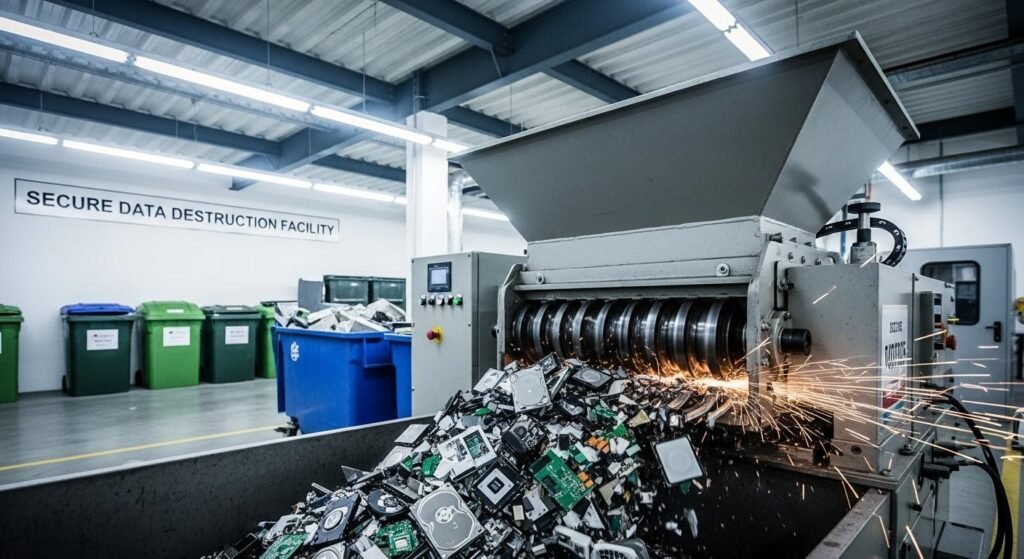
What actually happens when you delete a file
A file system works like an index. Deleting an entry removes the pointer, not the content. The sectors holding your data are simply marked available for reuse, and until something writes over them the original information is intact.
This is why recovery software exists and why it works so well on drives people believed were empty. A quick format is faster than a full one for exactly this reason: it rewrites the index and leaves the data alone.
Solid state drives complicate it further. Wear levelling spreads data across cells in ways the operating system cannot fully control, so even a thorough overwrite may leave copies in cells the software never touched.
Why DIY methods fail
Physical damage feels final. It usually is not. Drives survive more than people expect, and a partially damaged unit can still yield recoverable fragments in the right hands.
There is a second problem, and it is the one that costs money. Even if the drive is genuinely unreadable afterward, you cannot prove it. Under UK GDPR you need to demonstrate what happened to the data, not just believe it is gone. The ICO looks for documented process. No audit trail means no defence when someone asks.
The third issue is practical. Drives contain materials that should not go into general waste, and improper disposal creates a WEEE compliance problem on top of the data one.
What secure hard drive destruction involves
Certified hard drive destruction runs as a documented chain, not a single event:
- Collection in locked containers with tracked chain of custody
- Serial numbers logged and reconciled before anything is processed
- Industrial shredding to a specified particle size
- Certificate of destruction issued against the logged serials
- Residual material sent for responsible recycling
Every stage exists to close a gap. The serial log proves which drives were processed. The chain of custody proves nothing went missing in transit. The certificate ties it together into something you can hand to an auditor.
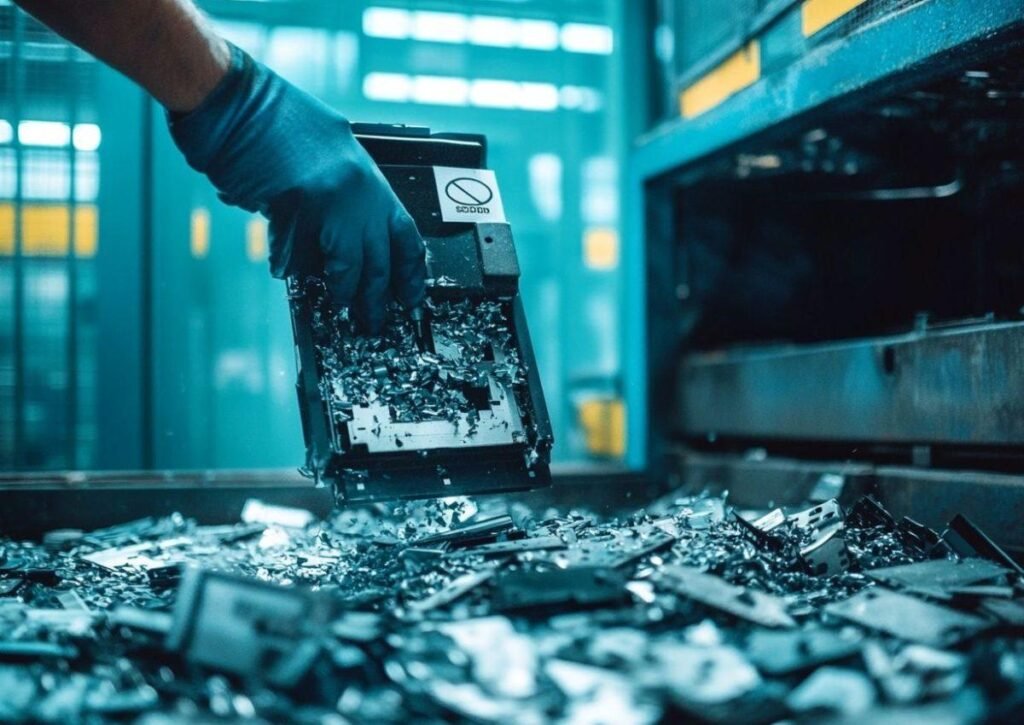
On-site versus off-site drive shredding services
Off-site collection is the standard option. Drives are collected, transported under custody, and processed at a secure facility. It is cheaper and suits most businesses.
On-site drive shredding services bring the equipment to your premises. Your team watches the drives go in and sees the output. It costs more, but for regulated sectors, or for a one-off decommissioning where nothing should leave the building intact, the difference is usually justified.
Hard drive shredding cost
Pricing generally works per drive or per collection, and unit cost falls as volume rises. A handful of drives from an office clearout will cost more per unit than a rack decommissioning.
Factors that move the price: total drive count, on-site versus off-site, location and collection distance, whether you need same-day turnaround, and the security level required.
Ask for a quote based on your actual drive count. Flat-rate assumptions rarely match what you end up paying.
Hard drive shredding near me
Coverage matters more than proximity. A provider with established national collection routes serves you as well as a local one, often at a better price, because the route is already running.
Whether you are searching for hard drive shredding in London, hard drive disposal near me, or a drive destruction service anywhere in the UK, ask four questions before you book:
- Do you issue a certificate of destruction listing individual serial numbers?
- What is the chain of custody from collection through to shredding?
- What certifications and accreditations do you hold?
- Where does the residual material go?
Total Shred answers all four before you book. Every collection is logged at serial number level, tracked under documented chain of custody from your door to the shredder, and closed out with a certificate of destruction listing every drive processed. Residual material goes to authorised treatment, not general waste.
Building it into your data retention policy
Destruction is not an event, it is a policy. Drives accumulate quietly: laptops from staff who left, servers replaced two upgrades ago, external drives in a drawer nobody has opened since the office move.
Set a schedule. Decide who owns the asset register. Decide the trigger for disposal, whether that is end of retention period, hardware refresh, or staff exit. Book collection on a cycle rather than waiting until the cupboard is full.
That is where the peace of mind actually comes from. Not from one shredding job, but from knowing there is no shadow inventory of drives sitting somewhere with customer data on them.
What to do next
Count your drives. Include the ones in decommissioned laptops and the box from the office move. Note the serial numbers if you can, because a provider will need them anyway.
Then get a quote for secure hard drive shredding based on that count.
The cost of a certified drive destruction service is always lower than the cost of a breach notification, and considerably lower than the fine that can follow one.